
Can you believe May is approaching already? Get ready to review essential math objectives! We have a great opportunity to help students strengthen key math skills before they move on to the next grade level. These last few weeks of the school year are the perfect time to review and reinforce what matters most
Essential Math Objectives

Kindergarten
- Count to 100 by ones and tens
- Identify and compare numbers to 20
- Represent addition and subtraction within 10
1st Grade
- Add and subtract within 20
- Understand place value (tens and ones)
- Measure and compare lengths

2nd Grade
- Add and subtract within 100
- Work with equal groups to build foundations for multiplication
- Read and interpret bar graphs and picture graphs
3rd Grade
- Multiply and divide within 100
- Understand fractions as numbers
- Solve two-step word problems
4th Grade

- Use all four operations to solve word problems
- Understand equivalent fractions and compare fractions
- Classify geometric shapes by properties
5th Grade
- Add, subtract, multiply, and divide fractions
- Understand place value and decimals to the thousandths
- Analyze patterns and relationships in data

By aligning May’s math instruction with clearly defined grade-level objectives, elementary teachers can help ensure that students solidify essential math skills before transitioning to the next grade.
Focusing on key concepts in May provides an opportunity to reinforce learning, close gaps, and build confidence in problem-solving and number sense.
Maximizing instructional time during this final stretch of the school year not only supports mastery of critical content but also strengthens students’ overall mathematical thinking.
This intentional focus lays a strong foundation for future success in math and encourages a positive mindset toward learning..
Happy Teaching

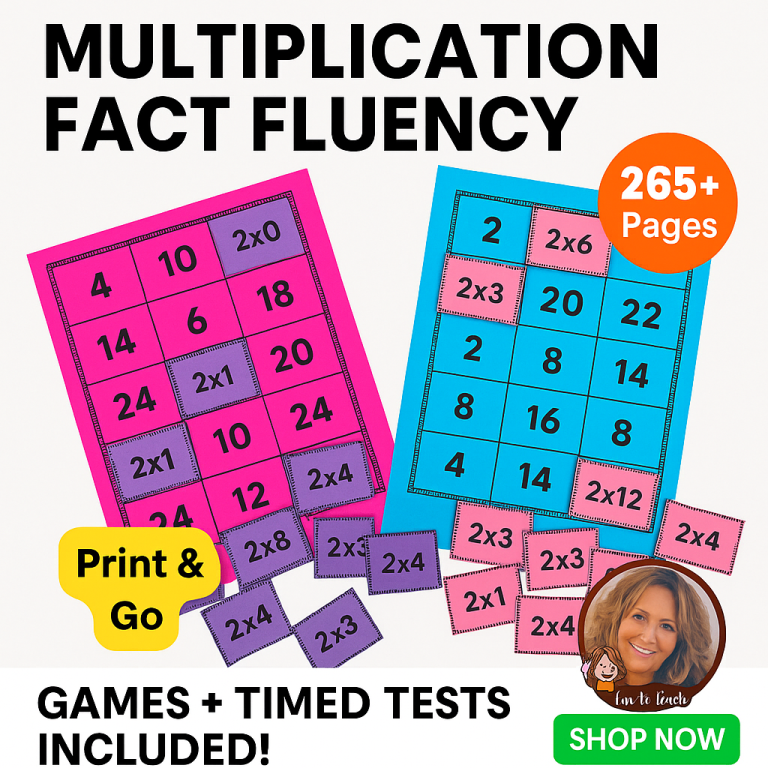
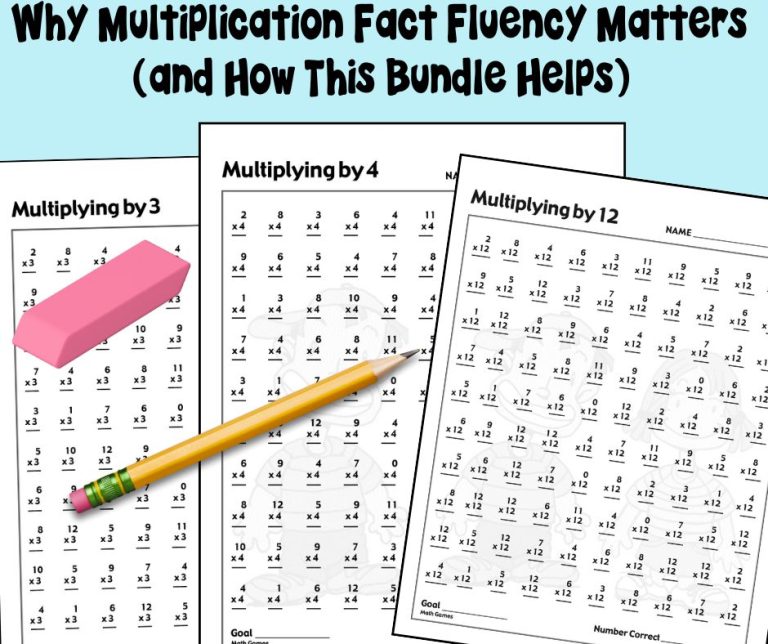
CLICK HERE TO SEE ALL OUR MULTIPLICATION RESOURCES, GAMES AND ACTIVITIES!
Looking for time-saving tips and tricks for teaching math and ESL? Sign up for my email newsletter to get free teaching resources and helpful strategies right in your inbox! Click here to sign up.
Check out my TPT store for some great
math vocabulary products, too! Click here!



This is a helpful end-of-year snapshot because it makes it easier to see where fact automaticity actually belongs instead of treating it like a generic drill block. The place we got tripped up was assuming “understands multiplication” automatically meant “can retrieve the facts without friction.” It did not. My daughter could explain what 7 groups of 6 meant and still hesitate every time 7×6 showed up cold. What helped was short daily mixed-fact practice with the slow facts recycled more often. In your grade-level planning, where do you like fact automaticity to become a real checkpoint instead of just extra practice?
Really like seeing the objectives laid out this clearly across K-5. One thing I keep coming back to is how easy it is for fact fluency to disappear inside the bigger standards list even though it changes how students experience everything else. A child can understand the model or the strategy and still hit a wall later because a few facts are not automatic yet. That showed up with my daughter a lot. I built mathbuilders.com for that short daily recall piece, so I am biased, but the broader takeaway is just to protect a small routine for weak-fact practice while the larger conceptual work keeps moving. It ends up helping the rest of the math block feel calmer. Curious where you think that fluency work fits best inside the K-5 objective map without letting it swallow the whole period.