Teaching kindergarten and first grade students to write complete sentences can be a juggling act! We’re teaching vocabulary, sentence structure, handwriting, and how to get those wonderful little ideas onto paper. Primary sentence starters are the key!
For English learners, there’s another layer. They may have plenty to say but haven’t learned all the English words they need.
That’s where primary sentence starters and word banks come in handy. They give young writers a little boost while leaving room for their own ideas.
And the good news? You don’t need to reinvent the wheel to get students writing!
Here are seven simple ways to get those pencils moving.
Firstly, Talk First, Write Second
Before students pick up their pencils, get them talking!
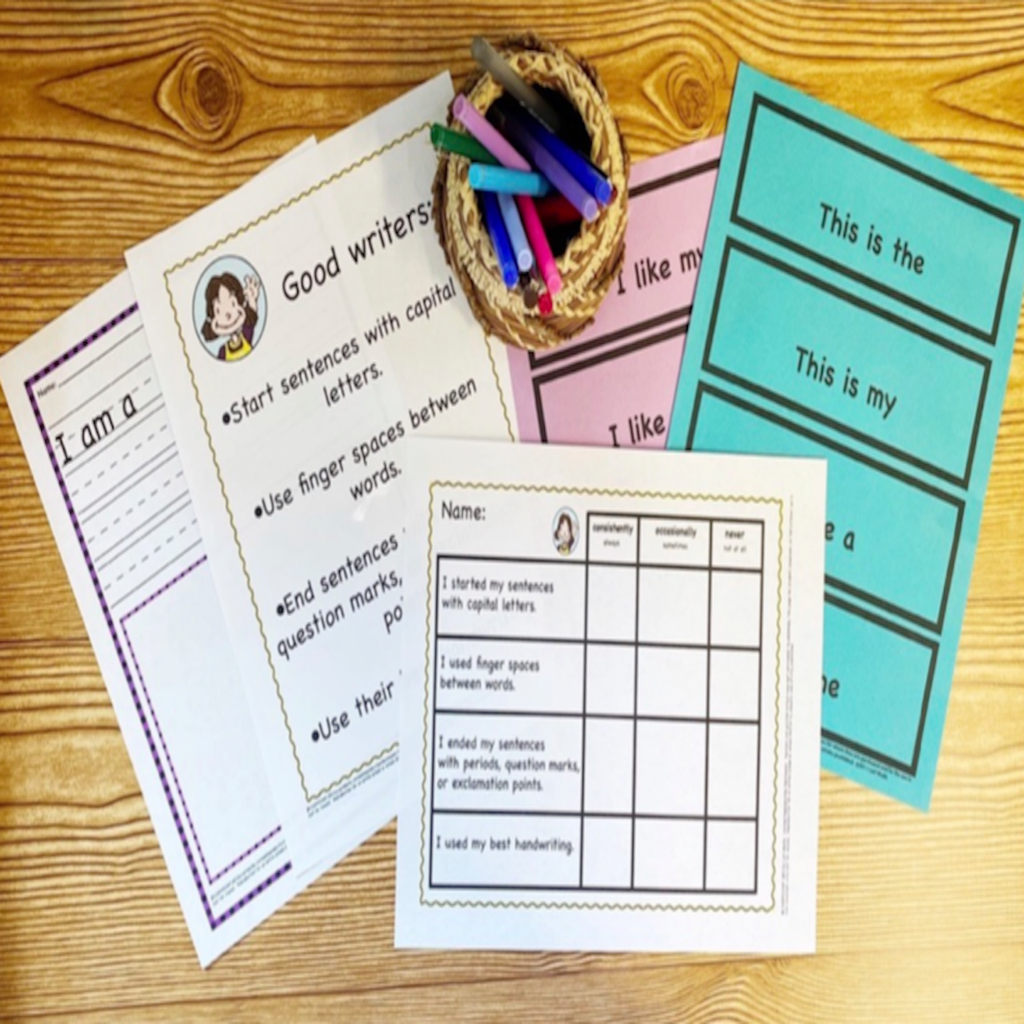
Introduce a simple sentence starter:
I like to
Model your answer, then have students practice with a partner.
Try this quick routine:
- Say the sentence together.
- Give students a moment to think.
- Have partners share their sentences.
- Invite students to write what they practiced.
A few minutes of oral language practice can make writing time much smoother, especially for English learners.
Next, Put Word Banks to Work
We’ve all heard, “Teacher, how do you spell…?”
Word banks help cut down on those interruptions while encouraging students to become more independent.
Before writing:
- Introduce a few words related to the prompt.
- Practice saying and using the words.
- Display picture vocabulary cards when needed.
- Encourage students to check the word bank as they write.
Primary sentence starters with word banks give beginning writers two helpful tools: a way to begin their sentences and the vocabulary to finish them.
GRAB YOUR SENTENCE STARTERS HERE!
Always, Make Writing Part of Your Morning Routine
Morning work doesn’t need to be complicated!
Keep a few familiar primary writing prompts ready for students to complete as they settle into the day.
Students can draw a picture and write a sentence about something they know, like their favorite food, a pet, or something they enjoy doing.
Some students may write just one sentence. Others will be ready to add a detail or two.
The trick is to keep the routine familiar so students spend more time writing and less time figuring out what to do.
Then, Add a Partner Twist Using Primary Sentence Starters
Turn a writing prompt into a quick conversation.
Try a sentence starter such as:
My favorite animal is ______.
Students tell a partner their answers before putting pencil to paper.
You can also have partners ask a follow-up question:
- Why do you like that animal?
- Where does it live?
- What does it look like?
Now one writing prompt is doing double duty—building speaking, listening, vocabulary, and writing skills!
Don’t Forget, Draw It Before You Write It
Sometimes the best place to start writing is with a picture.
Give students a few minutes to draw something related to the writing prompt. Then ask them to tell you about their drawings.
Use their answers to help them form complete sentences.
For example:
I see a ______.
A student might draw a playground and write, “I see a slide.”
Drawing gives young writers time to organize their ideas, and it can be especially helpful for English learners who are still developing their vocabulary.
Same Prompt, Different Support with Primary Sentence Starters
One of the things I like most about primary sentence starters is how easily they can be adjusted for different learners.
You can use the same writing topic with your whole class while changing the amount of help students receive.
- Newcomers: Use pictures, oral practice, and vocabulary choices.
- Beginning English learners: Provide a sentence starter and word bank.
- Developing writers: Encourage a complete sentence with an additional detail.
- More confident writers: Ask for two or three connected sentences.
Everyone is working on sentence writing, but not everyone needs the same starting point.
And you don’t have to prepare four different lessons!
Finally, Save a Few Writing Samples
Keep a writing sample from early in the year and compare it with one from a few months later.
Look for growth in:
- Using complete sentences
- Adding new vocabulary
- Including details
- Using capital letters and punctuation
- Writing more independently
It’s fun to see those first simple sentences grow into longer, more detailed writing.
And students love seeing how far they’ve come!
Ready-to-Use Primary Sentence Starters
If you’d like to make sentence writing a little easier to plan, take a peek at my Primary Sentence Starters & Writing Prompts for Kindergarten–2nd Grade.
This resource includes:
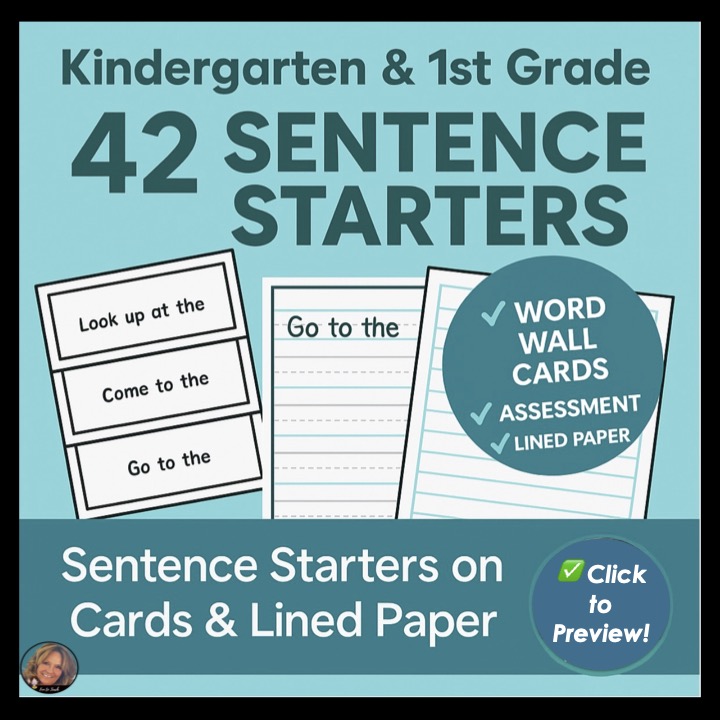
- 42 sentence starter writing prompts
- Word wall cards for vocabulary support
- Writing paper with space for drawing
- A teacher’s guide
- An assessment rubric
These primary writing prompts can be used for morning work, writing centers, small-group instruction, or ESL writing practice.
I like that students can work with the same prompt while getting the vocabulary and sentence support they need.
You can see the resource and preview on TpT to decide whether it will work for your classroom.
Keep Those Pencils Moving!
In conclusion, learning to write takes practice, patience, and plenty of chances to try.
Start with a little support, give students time to talk about their ideas, and gradually let them take the reins.
Before long, those first short sentences begin growing into something more!
Ready to try sentence starters in Math? READ MORE HERE!
Happy teaching!
I would love to hear your comments below!