By October, the school year has usually settled into a rhythm. I know my English learners better, and I have a much clearer picture of what they need next. When I plan my October ESL lesson plans, I focus on building language step by step.
Newcomers still need plenty of foundational English, while students at higher proficiency levels are ready to expand their vocabulary, strengthen grammar, and use more academic language.
I also want students using English in lots of different ways throughout the month. That means making time for listening, speaking, reading, and writing.
So, what do I actually teach my English learners in October?
Here’s a peek inside my October ESL planning.
October ESL Lesson Plans for Newcomers
First, I continue building foundational language with my Newcomers.
October is definitely not the time to rush past beginning English skills. Instead, students need many chances to hear and use the words and sentence patterns that help them communicate throughout the school day.
For example, my October Newcomer lessons include practice with:
- the verb to be
- pronouns
- emotions
- how and who questions
- prepositions
- alphabet review
These skills may look simple. However, they give beginning English learners important building blocks for speaking, reading, and writing. I also continue reviewing language students have already learned. After all, hearing a word or sentence pattern once usually isn’t enough. Instead, students benefit from meeting familiar language again in new activities and situations.
That is why spiral review is such an important part of my ESL teaching.
Build Vocabulary With Beginner English Learners
As students gain confidence, I begin asking them to do more with the English they know. Rather than simply naming an object, students can describe it, compare it, sort it, or use the word in a sentence.
In my October ESL lesson plans, I like to build vocabulary through number sense, cognates, picture-supported language, reading, speaking, and writing.
Cognates are especially useful for students whose home language shares words with English. Suddenly, a student may discover that an unfamiliar-looking English word is connected to a word they already know.
That connection matters.
Instead of beginning with, “I don’t know this,” students can begin with, “I know something about this already.”
From there, we can build.
Connect Speaking, Reading, and Writing
Next, I look for ways to connect the language domains instead of teaching each one in isolation. Story structure is tempting, it gives us a great opportunity to do that.
During October, my Beginner students work with beginning, middle, and end. We might talk about a story first, put events in order, read about what happened, and then write about it.
As a result, one language concept becomes practice in several different areas.
A Newcomer may use pictures and a sentence starter. In contrast, a more proficient student might retell the same sequence using complete sentences and additional details.
The topic can stay the same even when the language expectations change.
Add Academic Language for Intermediate ESL Students
By October, my Intermediate students are ready to stretch their language in new ways.
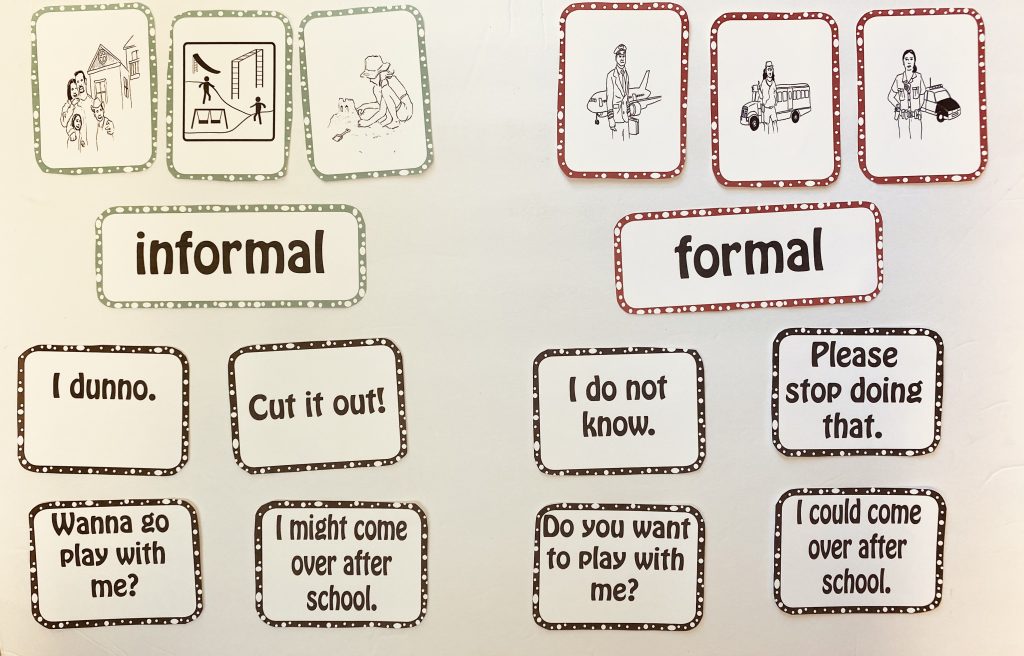
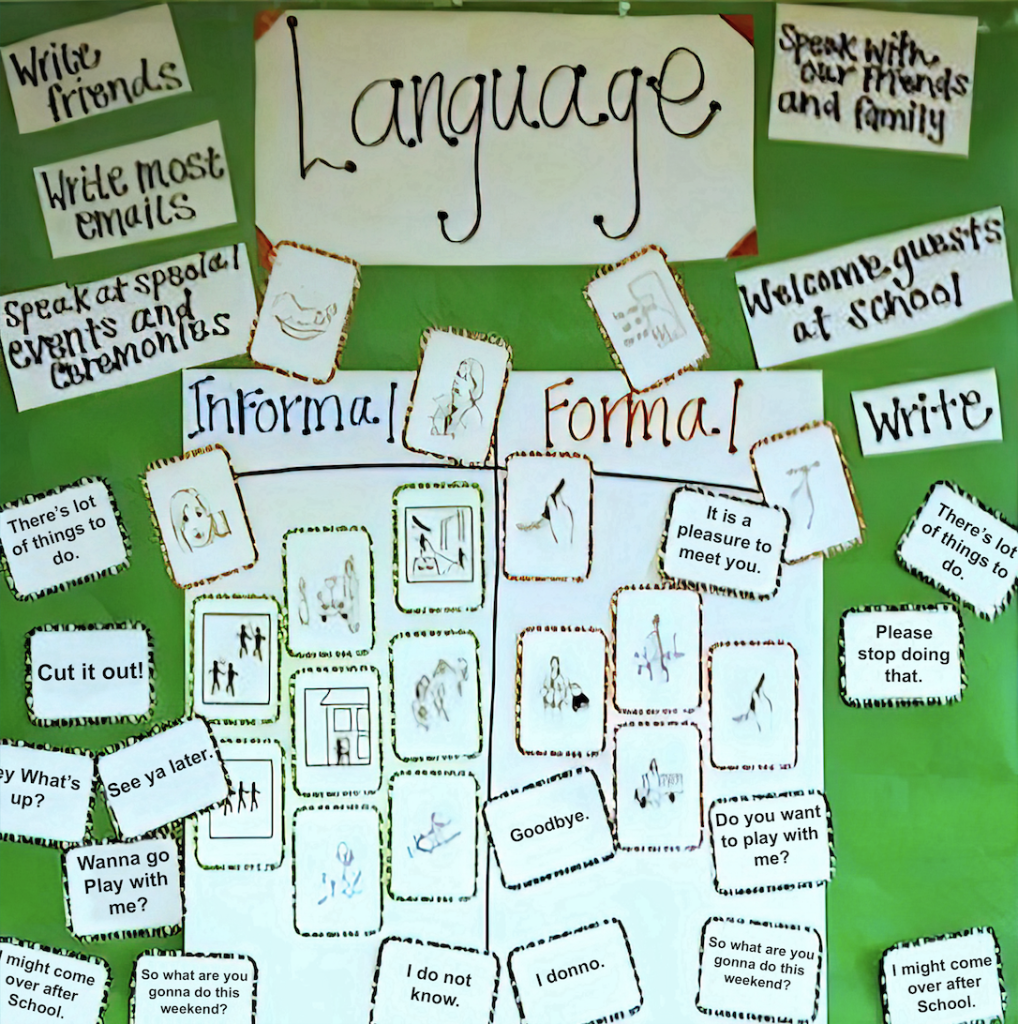
At this level, vocabulary is still important. However, I also want students to think about how English works and how language changes in different situations. For example, we work with formal and informal language.
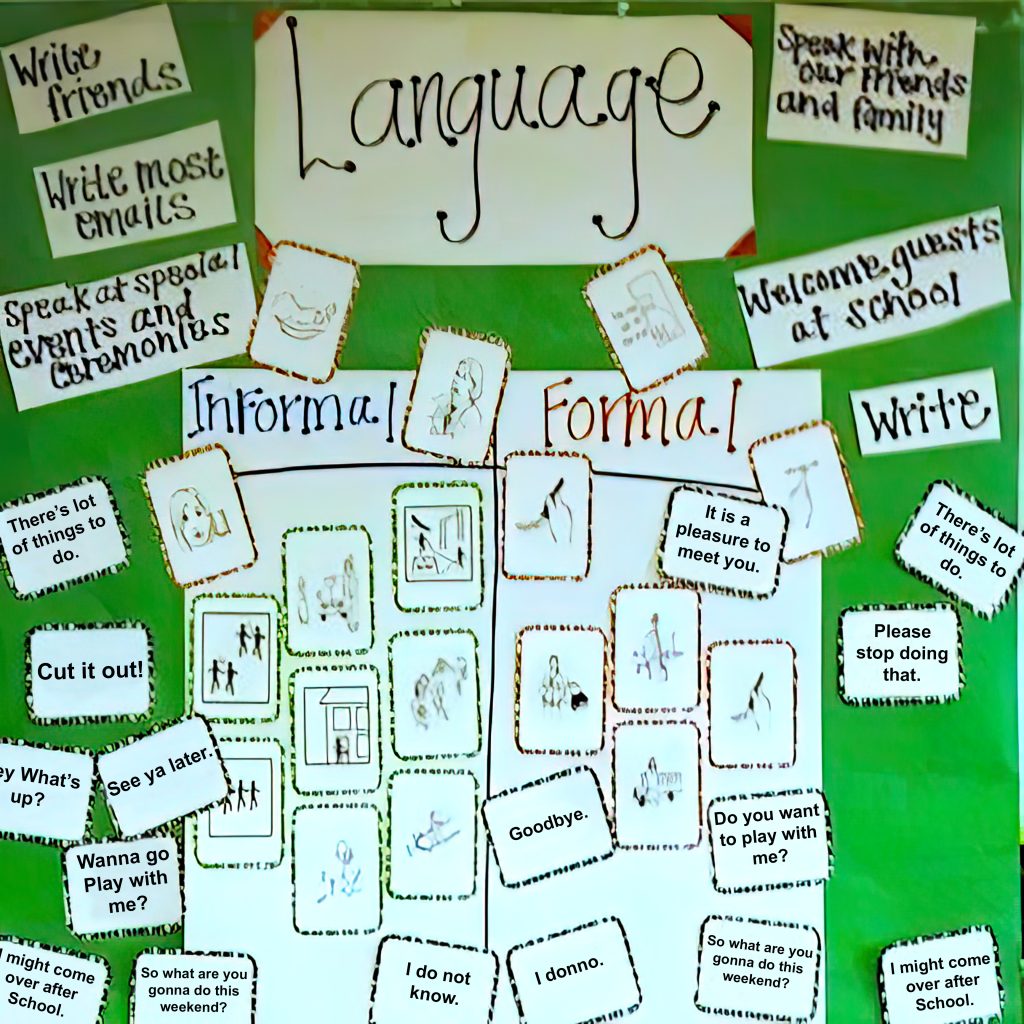
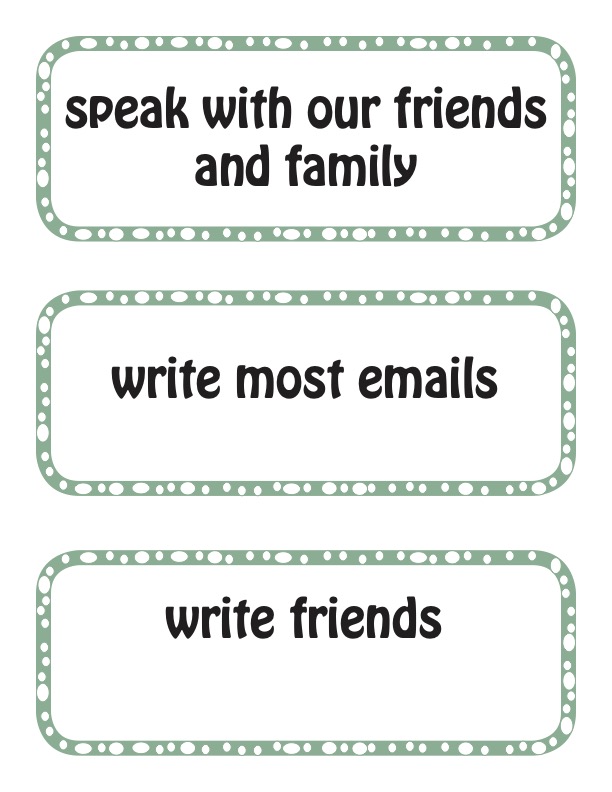
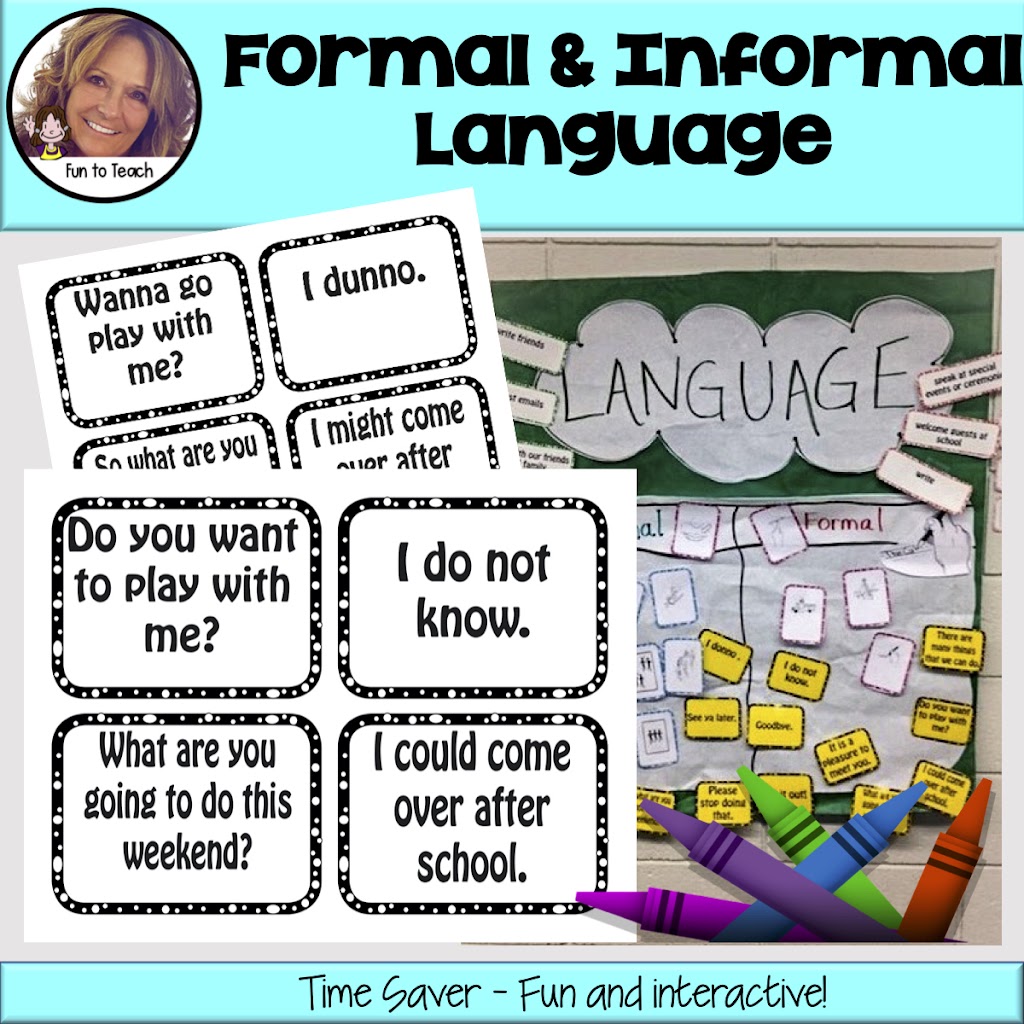
Students begin noticing that the way we speak with a friend may sound different from the language we use in school writing, a presentation, or a more formal conversation. In addition, we continue developing academic vocabulary. These are the words students need to explain ideas, participate in classroom discussions, and understand instruction across subject areas.
Grammar also becomes more complex. Therefore, students have opportunities to work with language structures such as irregular past tense verbs while continuing to strengthen oral language.
The goal isn’t memorizing one more grammar rule.
Instead, I want students to use that language while speaking, reading, and writing.
Challenge Early Advanced English Learners
Students at the Early Advanced level still need intentional language instruction. Sometimes, because these students can carry on conversations easily, it is tempting to assume they no longer need as much ESL support.
However, conversational English and academic English are not the same thing.
These students continue working with formal and informal language, grammar, and academic vocabulary. In addition, I look for opportunities to extend their thinking and language use.
The support may look different, but the need for purposeful language instruction remains.
October ESL Lesson Plans – Use Science to Build Academic English
Science is one of my favorite ways to get English learners using language for a real purpose.
Why?
Students naturally want to talk about what they see happening. In October, I use How Far Will It Roll?, an ESL science investigation centered on motion.
Before the investigation, students can make predictions. During the activity, they observe and compare what happens. Afterward, they sequence events and communicate their results. Consequently, students aren’t practicing English just because a worksheet tells them to.
They have something real to talk about.
Useful language might include:
I predict…
I noticed…
It went farther than…
First… Next… Finally…
Science gives English learners a reason to use vocabulary, complete sentences, comparisons, sequencing words, and academic language all at once.
Make Time for ESL Pronunciation Practice
Pronunciation is another area I don’t want to lose when the school year gets busy. Fortunately, pronunciation practice doesn’t need to take an entire lesson.
A few focused minutes can make a difference.
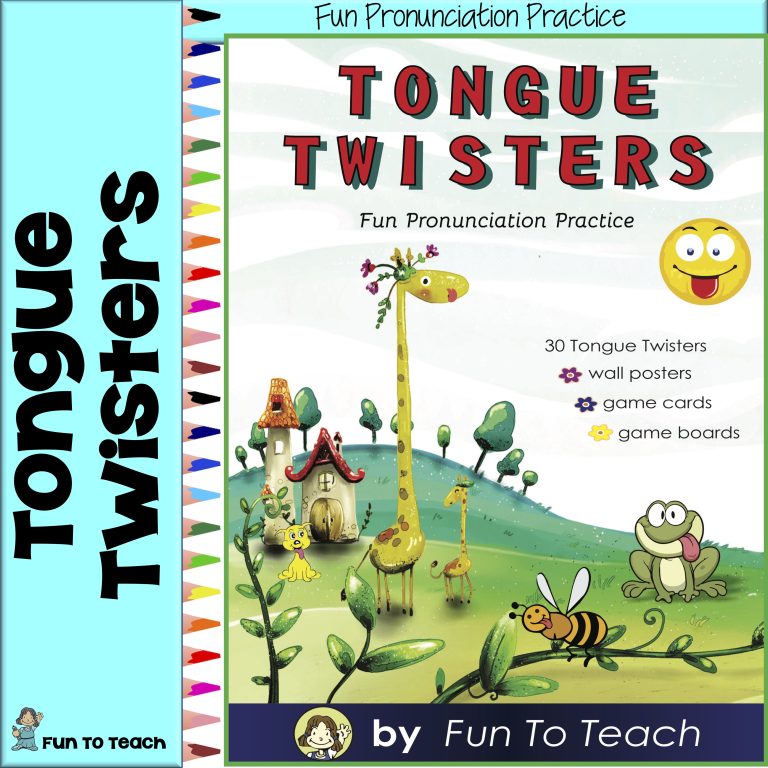
I like using tongue twisters and repeated oral-language practice because students get multiple opportunities to listen carefully to English sounds and then try those sounds themselves.
Most importantly, the goal isn’t speed.
Clear speech comes first.
Students can slow down, listen, repeat, and gradually become more comfortable producing unfamiliar English sounds. Over time, those short practice sessions can become a familiar part of the ESL routine.
Teach the Same Topic at Different ESL Levels
Of course, one of the biggest challenges in elementary ESL is teaching groups with several proficiency levels. You may have a Newcomer, Beginner, and Intermediate student sitting at the same table. Fortunately, that doesn’t always mean you need three completely different lessons. Instead, I often start with a common concept and adjust the language students are expected to understand and produce.
For instance, a Newcomer may point to a picture and finish a sentence starter.
A Beginner might respond with a complete simple sentence.
Meanwhile, an Intermediate student could explain an idea using more detailed or academic vocabulary.
Finally, an Early Advanced student might extend the same topic through discussion or writing.
The big idea stays connected. The language support changes. For me, that makes mixed-level ESL groups much more manageable.
Include Listening, Speaking, Reading, and Writing in October ESL Lesson Plans
Throughout my October ESL lessons, I also keep an eye on the four language domains. It’s surprisingly easy for one area to take over.
For example, an ESL lesson can quickly become mostly speaking and listening. On the other hand, students can spend too much time completing written activities without enough opportunities to actually use English aloud.
For that reason, I intentionally plan opportunities for all four areas.
Students listen to directions, conversations, stories, and other language models.
They speak with partners, answer questions, practice sentence frames, and build oral language.
Students also read words, sentences, and short texts connected to our language goals.
Finally, they write at an appropriate level, from labels and sentence starters to longer written responses.
Not every lesson needs equal amounts of all four domains. Still, by the end of the month, I want students using English in all four ways.
Don’t Try to Teach Everything at Once
This may be the most important part of my October planning.
A good ESL curriculum should give teachers direction. It shouldn’t make us feel like we’re racing through a stack of activities.
Some students need more practice.
Others need more review.
One group may spend several days on something another group moves through quickly.
Because of those differences, I prefer a flexible monthly framework instead of a rigid script. I want to know where we’re going. At the same time, I need the freedom to make decisions based on the students sitting in front of me.
Make October ESL Lesson Planning Easier
If you’re looking for more structure for your own October ESL lesson plans, I’ve organized these skills and resources in my October ESL Curriculum | K–5 Lesson Plans.
The curriculum includes four proficiency levels, from Newcomer through Early Advanced. It also includes an October Implementation Guide to help organize instruction throughout the month.
Inside the guide, you’ll find monthly language goals, weekly implementation plans, suggested instructional flow, resources organized by proficiency level, Can-Do goals, and a student Can-Do checklist.
However, it isn’t a scripted program.
Instead, the framework helps answer that familiar teacher question:
“What should I teach next?”
You still decide what your students need, how quickly to move, and when they need more practice.
That’s the kind of ESL planning I find most useful—enough structure to make planning easier, with enough flexibility to teach the students right in front of you.
The planning is done. The teaching is yours!