September is here! By now, you’ve met your students, started figuring out their English levels, and hopefully everyone knows where they’re supposed to be. 😂 Now comes the tricky part: planning mixed level ESL lessons when your students have very different language needs. You may have a brand-new newcomer sitting next to a student who can carry on a conversation in English but still needs support with academic language. So how in the world do you teach them all without creating four separate lesson plans?
The good news is—you don’t have to!
Here are some simple ways to make September ESL planning easier.
Start Mixed Level ESL Lessons With One Common Theme
One of the easiest ways I’ve found to teach Mixed Level ESL Lessons proficiency groups is to start with one common topic or theme.
Everyone can learn about the same general topic.
What changes is the language you expect students to understand and use.
For example:
Newcomers might learn key vocabulary and respond with a word or short phrase.
Beginners can use that vocabulary in simple sentences.
Intermediate students can begin describing, comparing, and explaining.
Early advanced students can give more detailed responses and use more academic language.
Same general lesson.
Different language expectations.
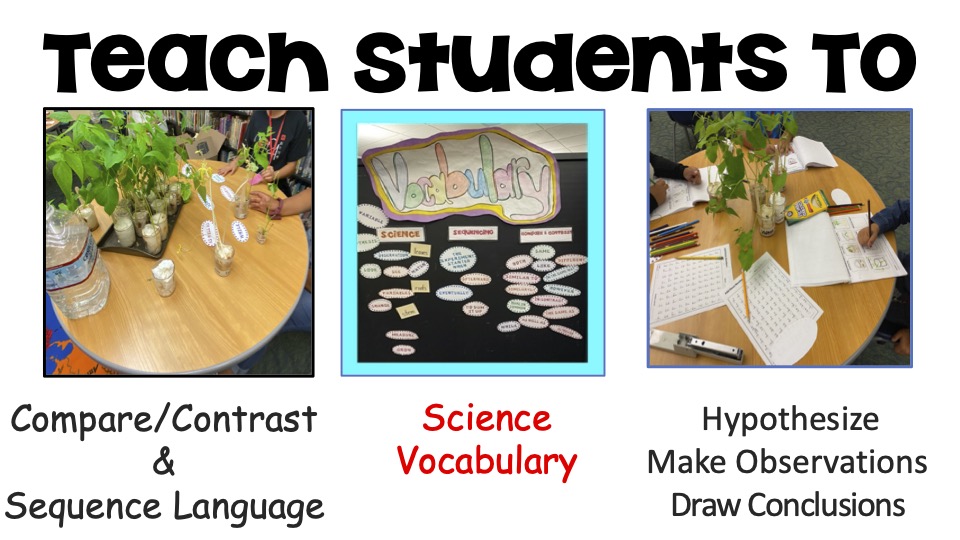
And believe me, that’s a whole lot easier than trying to keep four completely different lessons going at once!
Plan Mixed Level ESL Lessons Around Language Functions
Before you start pulling out games, worksheets, picture cards, and activities, ask yourself one question:
What do I want my students to DO with English?
Do you want them to:
- describe?
- ask and answer questions?
- compare?
- explain?
- retell?
- give an opinion?
- follow directions?
These are language functions, and they can really help take the guesswork out of ESL planning.
Instead of starting with, What activity am I going to do on Tuesday?, start with what you want your students to be able to do with English.
Then choose activities that help get them there.
Adjust the Language, Not the Whole Lesson
This is a BIG one.
When you’re teaching mixed levels, don’t automatically assume every proficiency level needs a completely different activity.
Often, you can use the same activity and simply change the language support.
A newcomer may need:
Pictures + vocabulary + pointing + one-word responses
A beginner may need:
Vocabulary + sentence starters + simple sentences
An intermediate student may be ready for:
Complete sentences + questions + descriptions
An early advanced student can work toward:
Detailed responses + explanations + academic vocabulary
You’re differentiating the language, not reinventing the wheel four times!
That’s a huge time-saver.
Get Students Talking During ESL Lessons
September is a great time to establish one important expectation:
ESL class is a place where we USE English.
Of course, that doesn’t mean putting a brand-new newcomer on the spot!
Start small.
Use partners.
Give students sentence starters.
Teach the vocabulary first.
Model what you want them to say.
Then give them plenty of chances to try it.
A newcomer pointing and saying one new word is making progress.
A beginner putting that word into a sentence is making progress.
An intermediate student explaining an idea is making progress.
They’re all working toward stronger English—just at different places along the way.
Include All Four Language Domains
It’s easy to get caught up in vocabulary at the beginning of the year.
And vocabulary IS important.
But we also want our students using that vocabulary through all four language domains:
👂 Listening
🗣 Speaking
📖 Reading
✏️ Writing
That doesn’t mean four separate activities!
Students might listen as you introduce vocabulary, practice the words with a partner, read the words in context, and then use them in a sentence.
There you go!
You just worked across several language domains without adding another lesson to your plan.
Bring Important Language Back Around
Here’s something I believe strongly about teaching English learners:
We can’t teach important language once and call it good.
Students need to hear it again.
Say it again.
Read it again.
Write it again.
And use it in different situations.
That’s why I’m such a fan of spiral review.
Bring vocabulary and language structures back around throughout the month.
It doesn’t have to be complicated.
A quick game, partner question, sentence starter, or five-minute warm-up may be all you need.
Little by little, the pieces start falling into place.
Plan the Week, Not Four Different Curriculums
Here’s where we can really make life easier.
Don’t sit down Sunday afternoon and think:
🌻 What will my newcomers do Monday?
📚 What will my beginners do Monday?
🗣️ What will my intermediate students do Monday?
🤔 What will my early advanced students do Monday?
Oh boy. You’ll be there all night!
Instead, look at the big picture for the week.
What is our topic?
What vocabulary do students need?
What language function are we practicing?
How will students listen, speak, read, and write?
Then decide how you’ll adjust the language and support for each proficiency level.
One weekly plan. Different levels of language support.
Much more manageable!
Make September Mixed Level ESL Lessons Easier
This is exactly why I created my September ESL Curriculum | K–5 Lesson Plans and its Implementation Guide.
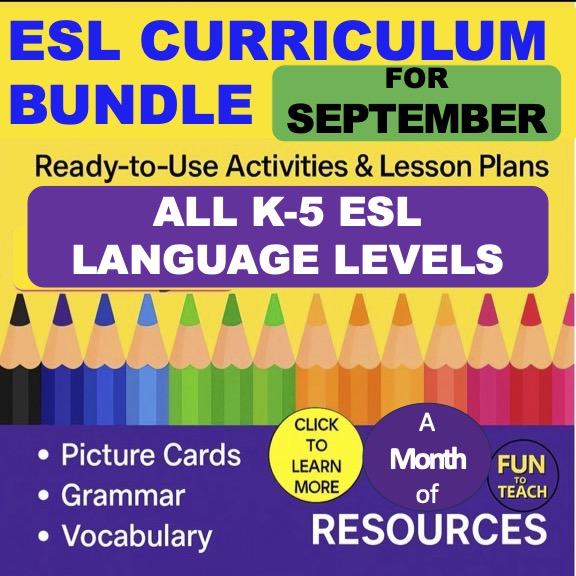
I wanted teachers to be able to open the month and have a roadmap instead of staring at a pile of resources wondering where to begin.
The September Implementation Guide lays out the month’s essential question, language functions, language focus, resources, weekly implementation suggestions, and Can-Do goals.
And one of the most helpful parts for a mixed-level class is that the language focus is broken down by English proficiency level.
You can see what to work toward with your:
Newcomers
Beginners
Intermediate students
Early advanced students
That doesn’t mean you have to follow a rigid day-by-day script.
Quite the opposite!
It’s a framework that helps you see where you’re headed while still letting YOU decide what your particular students need.
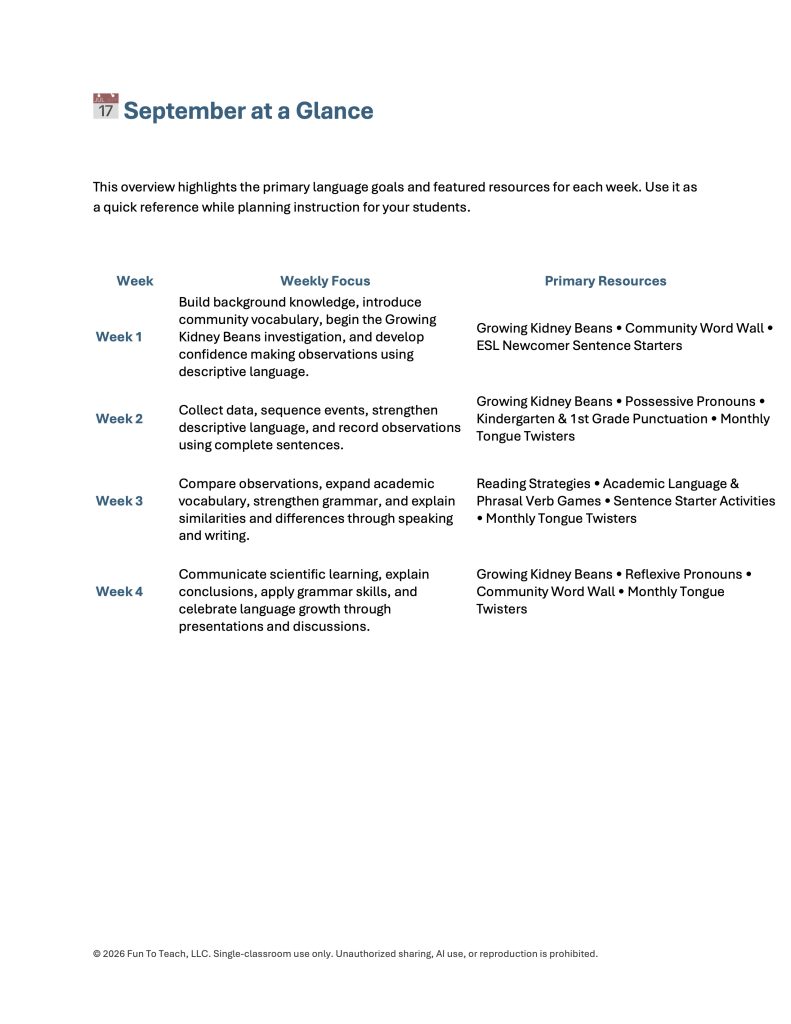
The planning is done. The teaching is yours!
Mixed Level ESL Lessons Don’t Need Four Lesson Plans
If you’re looking at your September groups and wondering how you’re possibly going to meet everyone’s needs, remember this:
Start together.
Use a common theme.
Decide what students need to do with English.
Adjust the language.
Provide different levels of support.
And keep bringing important language back around.
You don’t need four separate curriculums sitting on your desk.
You need one good plan with room to differentiate.
Once you start thinking about mixed-level teaching this way, it becomes a whole lot easier to manage.
And hopefully, that means a little less Sunday planning and a little more Sunday enjoying!
Hope you find this helpful!
I would love to hear your comments below!