Oh boy! It happens every year if you teach elementary ESL.
School has barely started. You’re finally getting into a routine, learning everyone’s names, and figuring out your schedule…and you get a new student…
Then your principal tells you, “You’ll be getting a new English learner tomorrow.”
Sound familiar?
If you’re anything like me, your brain immediately starts spinning.
What should I teach first?
Should I start with phonics? Vocabulary? Reading? Grammar?
Take a deep breath.
You don’t have to teach everything during the first month. In fact, if you try, you’ll probably feel like you’re chasing your tail—and so will your students.
The first 30 days are all about helping newcomers feel comfortable, confident, and successful.
Start with ESL Survival Language
Before students can write complete sentences or answer comprehension questions, they need to know how to get through the school day.
Teach simple phrases they can use immediately:
- Hello.
- My name is…
- May I go to the bathroom?
- I need help.
- I don’t understand.
- Thank you.
When students can communicate even a little, their confidence grows by leaps and bounds.


Teach Classroom Routines
Never assume newcomers understand how your classroom works.
Show them.
Practice how to line up.
Practice asking for supplies.
Practice partner work.
Practice cleaning up.
Then practice it again.
Remember, they’re learning English and learning how your classroom works at the very same time.
Focus on Everyday ESL Newcomer Vocabulary
Keep it simple.
Teach the words and vocabulary they’ll hear over and over throughout the day:
- classroom objects
- school supplies
- colors
- numbers
- feelings
- calendar words
- common action words
When students hear and use these words every day, they begin putting the puzzle pieces together.
Teach Language They Can Actually Use
One thing I’ve learned over the years is that vocabulary by itself isn’t enough.
Students don’t just need to know the word pencil.
They need to know how to ask,
“May I have a pencil?”
Teach language functions like:
- asking for help
- making requests
- introducing themselves
- answering simple questions
- following directions
Those are the skills they’ll use all day long.
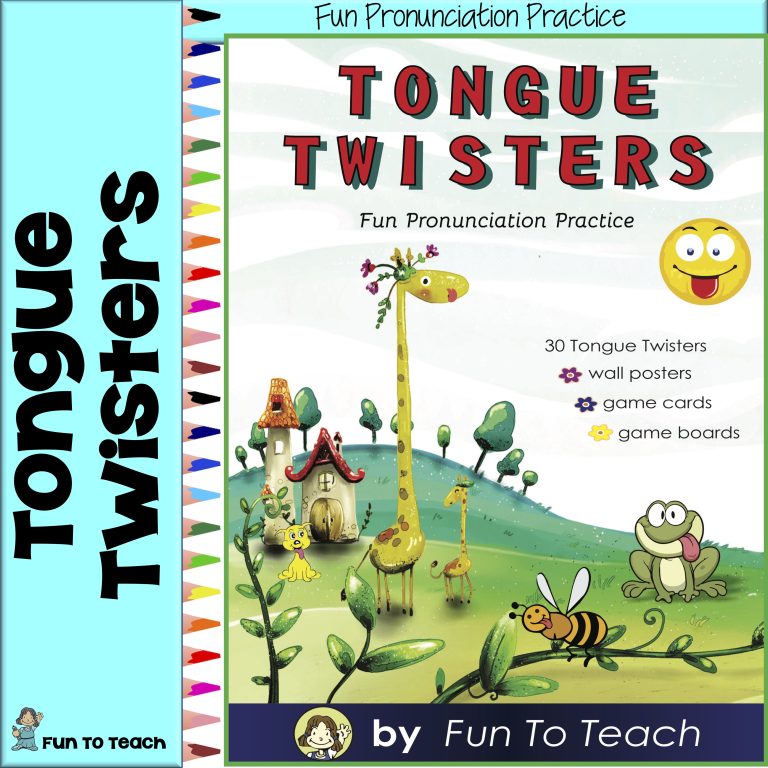
Don’t Skip Pronunciation i ESL
Pronunciation doesn’t have to be a separate lesson.
Practice English sounds while you’re teaching vocabulary.
Clap syllables.
Repeat tricky words.
Sing simple chants.
Play pronunciation games.
Little bits of practice every day really add up.
What About Reading and Newcomers?
This surprises a lot of teachers.
During the first month, I don’t worry about having newcomers read books independently.
Instead, I focus on building pronunciation, and oral language with lots of pictures, repeated vocabulary, listening activities, and shared reading.
Once students have a strong language foundation, reading becomes much less intimidating.
Here’s What You Can Stop Worrying About
During those first few weeks, don’t lose sleep over:
- long grammar lessons
- paragraph writing
- spelling tests
- grade-level reading passages
- perfect pronunciation
There will be plenty of time for those later.
Right now, your goal is simple:
Help students understand.
Help students communicate.
Help students feel like they belong.
Everything else builds from there.
Ready to Take the Guesswork Out?
If you’re looking for ready-to-use lessons, my ESL Newcomer Bundle is designed specifically for those critical first weeks of school. And if you want a complete roadmap that keeps building language all year long, my Yearlong ESL Curriculum takes your students from those first survival phrases to confident communication one step at a time.
Because when the planning is done, the teaching is yours.

Looking for time-saving tips and tricks for teaching math and ESL? Sign up for my email newsletter to get free teaching resources and helpful strategies right to your inbox! Click here to sign up.